
Materials
Specialist silicone coatings: reducing friction with MED10-6670
How low-friction silicone coatings such as NuSil MED10-6670 can improve sliding performance and abrasion resistance, and what should be considered before specifying them for a medical device.
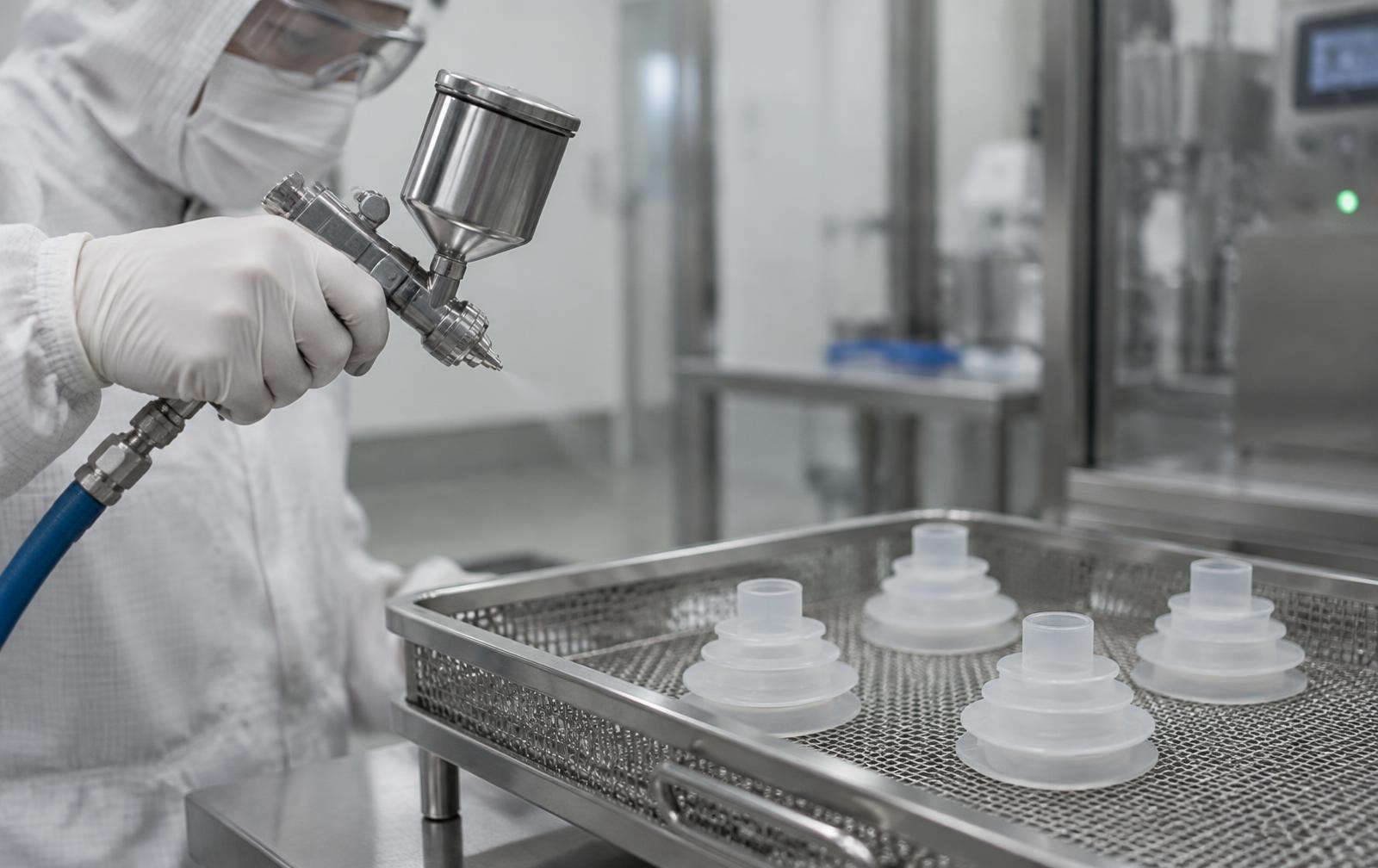
Silicone is chosen for medical components because it is flexible, resilient and available in well-supported medical grades. Those same surface characteristics can create friction where a part has to slide, rotate or move against another surface. A specialist silicone coating can modify that interface without changing the bulk material or redesigning the complete component.
NuSil MED10-6670 is one example. It is a two-part, low-viscosity silicone dispersion developed to form a thin, low-coefficient-of-friction film on silicone parts. Applied correctly, it can reduce drag and improve abrasion resistance on components including tubing, balloons, valves, stoppers and O-rings. It is not a universal solution, however. Material compatibility, application method, cure, intended use and device-level validation all have to be considered together.
What is a specialist silicone coating?
A silicone dispersion contains an elastomer in a carrier that lowers its viscosity for application. It can be sprayed or otherwise deposited as a very thin layer. The carrier is removed during processing and the silicone cures to leave a flexible film bonded to the surface.
Manufacturers offer one and two-part systems, solvent-based and solventless materials, and formulations designed for particular surface properties. Depending on the grade, these may include improved lubricity, optical clarity, hydrocarbon resistance or abrasion performance. The right choice depends on the substrate, the geometry of the part and the conditions the finished device will encounter.
This is different from adding a lubricant at the point of assembly. A cured coating becomes a controlled part of the component's surface. That can offer a more consistent approach where loose or migrating lubricants would be undesirable, although its performance still needs to be demonstrated in the finished application.
MED10-6670 as a practical example
MED10-6670 is described by NuSil as a low-coefficient-of-friction silicone coating. It is a platinum-catalysed, addition-cure elastomer supplied as two components dispersed in xylene and mixed at a 1:1 ratio by weight. Its low viscosity is intended to support spray application and the formation of a thin film.
The supplier's typical data describes a mixed solids content of approximately 25% and a cure schedule that includes an initial period at ambient conditions followed by heat cure. These figures are useful when considering a process, but they are not a production specification. The current technical data sheet and the requirements of the individual device should always govern material selection and process development.
The coating is intended to reduce friction relative to an uncoated silicone surface and to improve resistance where surfaces move, slide or rub. Potential applications include:
- Tubing: reducing drag on internal or external surfaces where another component passes through or over the tube.
- Valves and seals: supporting smoother movement where silicone surfaces repeatedly contact a mating component.
- Stoppers and O-rings: reducing assembly force and the risk of surface damage during insertion or operation.
- Flexible components: limiting surface tack where folds, membranes or adjacent silicone features can contact one another.
Why the substrate and geometry matter
A coating can only be as consistent as the surface beneath it. Mould release residue, dust, handling contamination and incomplete post-cure can all affect wetting or adhesion. Surface preparation therefore needs to be defined alongside the moulding and finishing process, not treated as an informal operation after production.
Geometry matters as well. A straight tube presents a different challenge from a deep groove, a thin valve slit or a component with a hidden internal surface. Spray angle, masking, fixture design and part rotation all influence coverage. Too little coating may leave an inconsistent functional surface; too much may create runs, local build-up or a dimensional change at a critical feature.
Where adhesion is difficult, a primer may be considered. The MED10-6670 distributor information references NuSil MED1-161 for some bonding applications, but primer selection and use should be confirmed for the exact substrate and process. A primer adds another controlled material and another operation, so it also adds validation and traceability requirements.
Process control is more than a spray setting
MED10-6670 uses platinum-cure chemistry, which can be inhibited by certain contaminants. The manufacturer's processing guidance advises thorough mixing of each component, adding Part A into Part B, avoiding wooden spatulas and avoiding latex gloves. Solvent loss also has to be controlled because it can change the concentration and application behaviour of the dispersion.
A robust production process may need to define:
- material receipt, shelf life, storage and batch traceability;
- mix ratio, mixing method and usable working time;
- surface preparation and the maximum time between preparation and coating;
- application equipment, pressure, distance, angle and number of passes;
- fixture design and masking of surfaces that must remain uncoated;
- flash-off conditions, oven profile and cure confirmation;
- inspection for coverage, contamination, runs and surface defects;
- functional testing against an agreed friction or assembly-force requirement.
For regulated programmes, these controls should sit within the same ISO 13485 quality system as moulding, inspection, assembly and packaging. The relevant acceptance method must be agreed before validation. A visual inspection can confirm obvious coverage defects, but it does not by itself prove friction performance, adhesion or durability.
Biocompatibility and intended use
Material data is only one part of a medical device assessment. NuSil reports that MED10-6670 passes the cited cytotoxicity screening tests, but this is not the same as demonstrating the biological safety of a finished device. The device manufacturer remains responsible for its biological evaluation, risk assessment and testing based on the nature and duration of patient contact, manufacturing residues, sterilisation method and final configuration.
There is also an important product-specific restriction. The MED10-6670 technical data states that it should not be considered for human implantation for more than 29 days. It should not be confused with similarly named materials carrying different intended-use statements. The exact grade, revision of the technical documentation and regulatory support package must be checked at the start of a programme.
Coating, material change or design change?
A coating is most useful when the bulk properties of the chosen silicone are right but the surface needs to behave differently. If the problem is caused by an unsuitable hardness, poor feature geometry or an uncontrolled moulded finish, adding a coating may simply conceal the underlying issue.
Early trials should compare the available options. A lower-friction coating may be the most direct route, but a change in silicone grade, surface texture, mating material or component design may be simpler to validate. CPT can review these choices alongside medical-grade silicone selection, tooling, moulding and downstream assembly requirements.
How CPT can support a coated silicone programme
CPT supports medical silicone projects from material and design review through cleanroom moulding, inspection, assembly, packaging and sterilisation management. Where a specialist coating forms part of the requirement, we can help define the moulded substrate, identify critical surfaces, develop suitable fixtures and establish how the coating operation fits into the controlled manufacturing route.
The most effective starting point is a clear description of the problem to be solved. That may be excessive insertion force, silicone-to-silicone tack, wear after repeated movement or damage during assembly. From there, measurable acceptance criteria can be set and samples can be compared before a process is committed to validation.
If you are considering MED10-6670 or another specialist silicone coating for a new or existing device, please contact the CPT engineering team. We can review the component, intended use and production requirements under confidentiality.