
Cleanroom
Cleanroom silicone moulding: what ISO 8 (Class 100,000) really means for your part
ISO 14644 classification is only part of the story. Gowning, airflow, particle monitoring and how the moulding process itself is set up all decide whether an ISO 8 cell delivers on its promise.
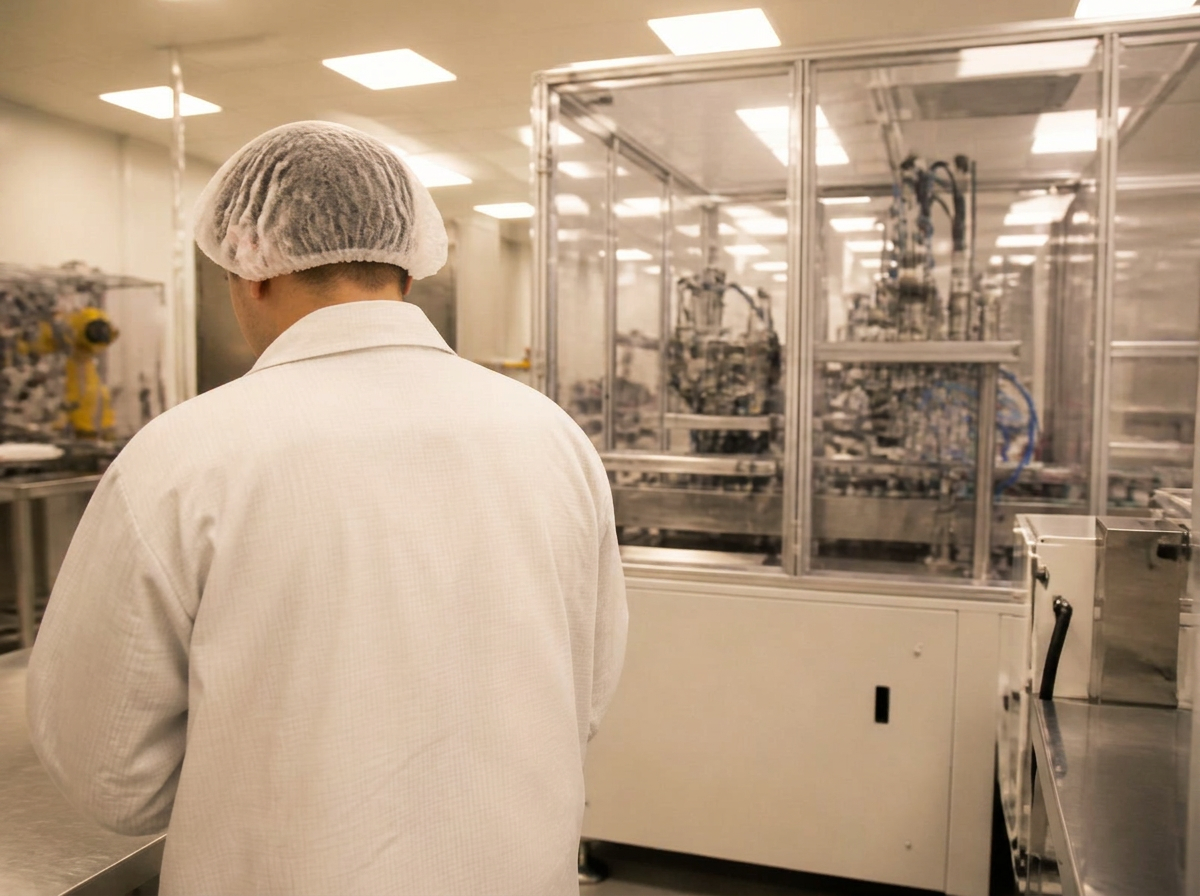
Customers frequently ask whether an ISO 8 (formerly Class 100,000) cleanroom is sufficient for their silicone component. In almost every medical application the answer is yes, provided the room is operated in the manner ISO 14644 intends and provided the moulding process itself is configured to preserve the cleanliness the room provides.
The term "cleanroom" carries considerable weight in medical procurement discussions and often obscures more than it reveals. Two facilities that both describe their operation as "ISO 8 cleanroom manufacture" can differ significantly in gowning discipline, monitoring frequency, material-handling controls and operating culture. Those factors determine the cleanliness of the finished part, rather than the classification certificate alone.
What ISO 8 actually specifies
ISO 14644-1 defines classification by airborne particle counts, measured at defined particle sizes. ISO 8 permits up to 3,520,000 particles per cubic metre at ≥0.5 µm, one-hundredth of the ambient environment outside the room, but two orders of magnitude looser than ISO 5 (the classification used for aseptic filling).
Crucially, ISO 14644-1 says nothing directly about microbial load, gowning regime, or how often you monitor. Those live in ISO 14644-2 (monitoring), ISO 14644-3 (test methods), ISO 14644-5 (operations) and, for medical-device manufacture, in the QMS controls layered on top under ISO 13485. A room can be classified as ISO 8 in its "at rest" state and still be run in a way that lets particulate load rise well above class in operation if the monitoring and control regime is weak.
That is why the more useful question is not "what class is your room?" but "how do you demonstrate the room stays in class while you are actually making my part?"
Why silicone moulding sits well at ISO 8
LSR and HCR silicone processing is inherently clean compared with many other polymer processes. Sealed material paths, cold-runner tooling and platinum-cure chemistry mean the primary particulate risk in a well-designed cell is from the environment and the operator, not the material itself. There is no regrind, no purge waste sitting in a bin next to the press, no drying hopper generating dust.
Combine that with:
- Automated part handling from mould to inspection where geometry allows.
- Cleanroom-side vision inspection and packaging, so parts are bagged before they can pick up contamination in an uncontrolled environment.
- Controlled introduction of tooling, inserts and consumables through defined wipe-down and staging areas.
- Gowning matched to the room class, with validated donning procedures and defined re-gowning triggers.
...and an ISO 8 environment is a well-matched envelope for the vast majority of Class I, IIa and IIb device components. It is the class most European and UK medical silicone moulders operate in for very good reasons.
Where ISO 8 stops being enough
There are applications where ISO 8 alone is not the right answer:
- Parenteral fluid-path components where the customer's own risk assessment, driven by the drug, the dose and the route, pushes the requirement to ISO 7 or tighter.
- Implantable components with specific bioburden targets driven by the sterilisation validation. A gamma or EO cycle is more forgiving of pre-sterilisation bioburden than a moist-heat cycle with a low sterility assurance level target, and the cleanroom class has to match the cycle assumptions.
- Combination products where the drug side of the file mandates a tighter classification for the primary contact surfaces, even if the mechanical performance of the elastomer would be fine at ISO 8.
- Aseptic-processed assemblies, which are a different regulatory conversation entirely and typically well beyond the scope of a component-moulder cleanroom.
In these cases the answer is not always "build a tighter room" from end to end. It is often smarter, and much more capital-efficient, to segment the process: moulding at ISO 8 with material handling and inspection controls built for that class, then critical secondary operations (final packaging, assembly of the fluid-contact interface, primary container closure) in a smaller ISO 7 zone matched to the specific step that needs it.
Operating the room, not just certifying it
Classification is a snapshot. Operation is a discipline. What separates a compliant cleanroom from a useful one is:
- Gowning validated for the class: not adopted from a supplier catalogue, but validated by particle challenge and periodic gowning qualification of each operator.
- Routine particle and viable monitoring at defined locations, with trended data that flags drift before it becomes an excursion. Monitoring frequency should match the risk profile of the process, not the minimum required for annual recertification.
- Controlled material and tooling introduction through validated wipe-down and staging procedures, including insert loading, tool changes and consumable replenishment during a run.
- Change control that treats the environment as part of the validated state. A new press, a modified HVAC filter, a change of glove supplier, or a re-layout of the material flow are all changes with environmental implications and all deserve documented assessment.
- Cleanroom behaviour training and refresher cycles for every person who enters the room, including visitors and maintenance.
Auditing a cleanroom on paper
When qualifying a silicone moulder for a medical programme, the useful things to ask for, beyond the classification certificate, are:
- Recent particle monitoring data (trended, ideally 12 months, at "in operation" state).
- Viable monitoring programme description and typical results.
- Gowning validation records and re-qualification frequency.
- Environmental change-control log covering the last 12–24 months.
- An excursion example, an out-of-class event and how it was investigated, contained and closed out. Every real cleanroom has these; the honest answer is "here is our last one and here is what we did."
A supplier that can produce all five without a scramble is a supplier that operates the room, not just certifies it.
Our facility
Our ISO 8 cleanroom is operated under our ISO 13485:2016 QMS with the controls above built in as standard. Read more on the Cleanroom and Quality pages, or get in touch to discuss your specific application, including whether ISO 8, a segmented ISO 7 zone, or a phased plan to grow into a tighter classification is the right fit for your programme.